The most widely used screen changer in the extrusion industry
Plate screen changer is one of the most widely used screen changing equipment in the extrusion industry, suitable for the vast majority of polymer material processing production lines. The specific application scope of different structural types is as follows:
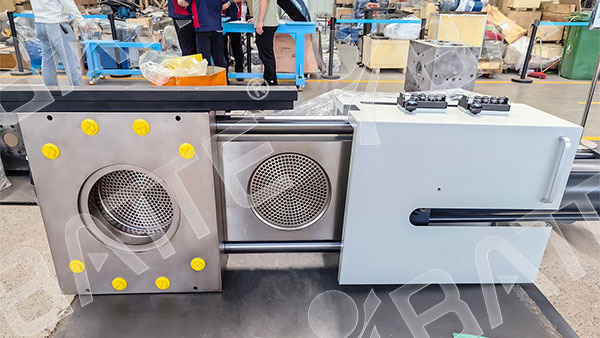
General Basic Scenarios
Single board single station plate type screen changer: suitable for experimental lines and small batch intermittent production scenarios, suitable for working conditions that do not require high production continuity and allow for short shutdowns for screen changing. It is mostly used for small-scale research and development, and small-scale trial production of special materials.
Single board dual station plate screen changer: As a mainstream universal model, it is suitable for most conventional extrusion production lines, including ordinary plastic granulation, pipe extrusion, blown film, packaging belt production, profile extrusion and other scenarios. It has high cost-effectiveness and can meet the non-stop screen changing needs of most general working conditions.
High capacity and stable production scenario
The dual plate dual station plate screen changer adopts a dual channel design, doubling the filtration area and minimizing pressure and temperature fluctuations during screen replacement. It focuses on high output and high stability requirements and is suitable for production lines that are sensitive to production interruptions and require continuous stable discharge, such as high-capacity pipes, thick plates, cast films, and blended modified granulation.
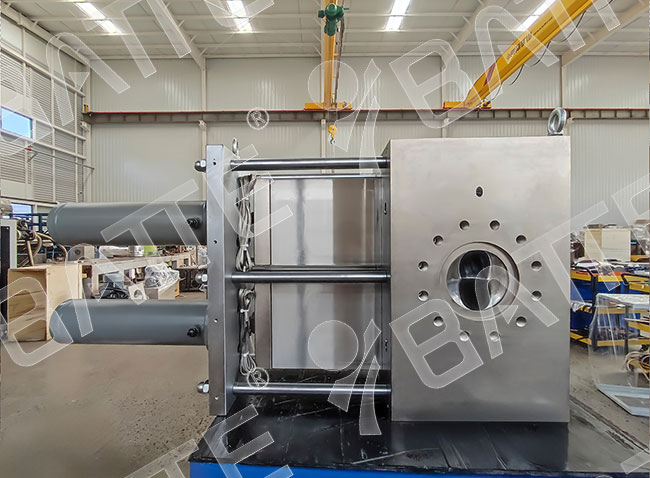
High precision high-end product scene
The single board four station plate type screen changer can achieve rotating and cyclic switching of the filter screen, and the temperature and pressure fluctuations during the screen changing process are almost negligible, which can maximize the consistency of product specifications and adapt to production scenarios such as high transparency films, high-precision sheets, medical grade plastic extrusion, and fiber optic drawing that require extremely high process stability and product accuracy.
Scope of compatible materials
Compatible with most common plastics and engineering plastics such as PP, PE, ABS, PS, PVC, EVA, PET, PVB, PBT, TPE, PC, PA, etc. It can also adapt to the melt filtration conditions of some chemical fibers, rubber, and elastomers, and can operate stably in high temperature and high pressure environments below 300 ℃ and 35MPa.
Email: sale@meltpump.com
WhatsApp: +86 158 3833 1071