Advantages of Manual Screen Changers in Film Blowing Applications
Manual screen changers are melt filtration devices characterized by their simple structure, low cost, and ease of maintenance. They are widely used in plastic extrusion production lines and perform particularly well in film blowing applications. Their key feature is the ability to replace screens manually, without the need for hydraulic or electrical control systems, making them ideal for small- to medium-scale production environments where screen changes occur infrequently.
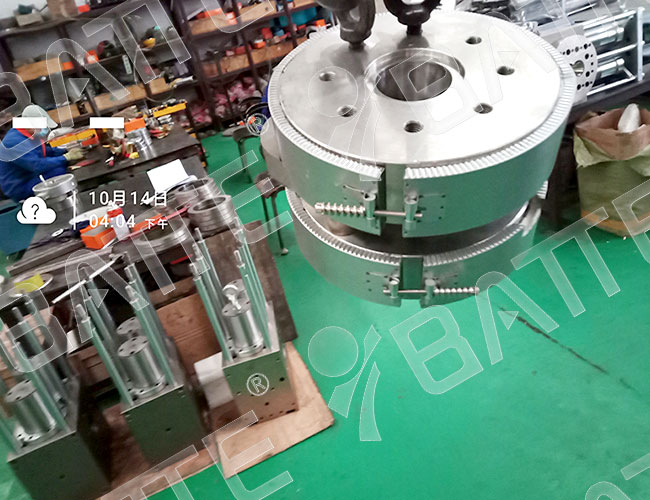
I. Key Features (Advantages in Film Blowing Applications)
Cost-Effective and High Value for Money
Manual screen changers cost only 1/3 to 1/10 of the price of hydraulic or continuous screen changers, making them particularly suitable for small and medium-sized enterprises with limited budgets.
Simple Operation and Quick to Master
The screen changing process is completed simply by turning a handle, requiring no specialized technical personnel and resulting in low training costs.
Compact Design and Flexible Installation
Compact and lightweight, it can be adapted to film blowing machines of various specifications, making it particularly suitable for workshops with limited space.
High Stability, Low Failure Rate
With no hydraulic or electrical components, it is less prone to leaks or electrical failures during operation, ensuring high reliability over the long term.
Excellent Sealing, Leak-Proof
Utilizing high-temperature-resistant and wear-resistant special alloy materials combined with a flexible sealing design, it ensures no material leakage even at high temperatures ranging from 150°C to 250°C.
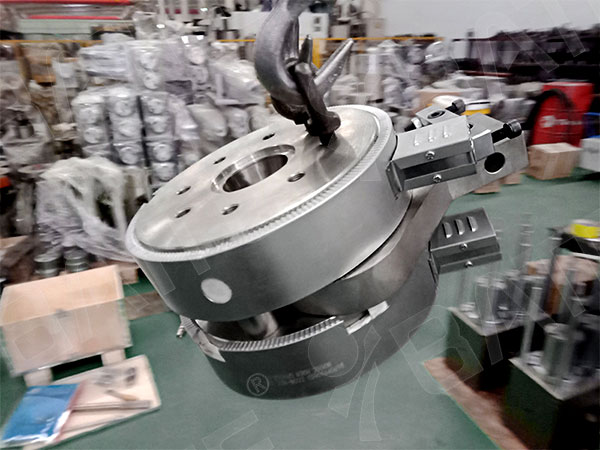
II. Design Principles of the Dual-Station Filter System
Manual screen changers typically employ a dual-station configuration, in which the slide plate features two filter channels—one active and one on standby:
When pressure rises due to the main station’s filter becoming clogged with impurities, the operator shuts down the machine to reduce pressure, then manually operates the handle to remove the contaminated filter while simultaneously pushing the clean standby filter into the main flow channel.
Although this design requires a brief shutdown, the changeover is rapid (3–5 minutes for a skilled operator) and effectively ensures film quality by preventing defects such as holes and crystal spots.
⚠️ Note: The dual-station design does not mean “non-stop operation,” but rather “rapid screen change,” and is suitable for scenarios where screen changes do not exceed 2–3 times per shift.
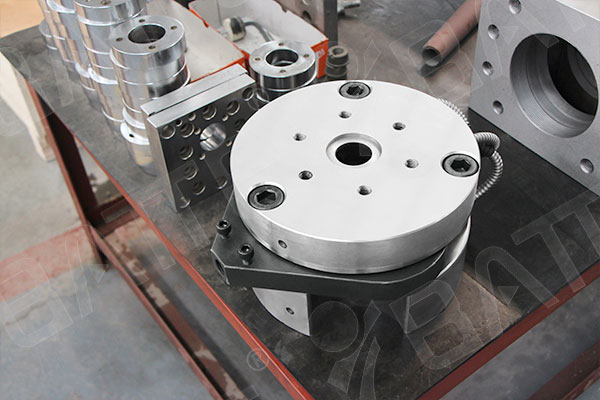
III. Core Structural Components and Functions
Body (Housing) Supports the entire structure, contains the melt flow channel, and connects the extruder to the die at both ends. Made of 45# steel or 40Cr steel, with a pressure rating of 15–35 MPa
Slide Plate A core moving component featuring one or two screen openings; screen changes are performed via a sliding mechanism. High-quality slide plates undergo nitriding treatment, achieving a hardness of over HV800, ensuring excellent wear resistance and durability
Screen A stainless steel wire mesh with mesh counts ranging from 20 to 200, used to intercept coke particles and impurities. As a consumable item, it requires regular replacement
Sealing System Includes sealing rings and precision clearance (0.05–0.08 mm). Utilizes flexible compensation sealing technology to automatically enhance sealing performance as pressure increases
Heating System External heating ring + thermocouple + temperature controller, maintains uniform melt temperature and prevents condensation from affecting slide plate retraction
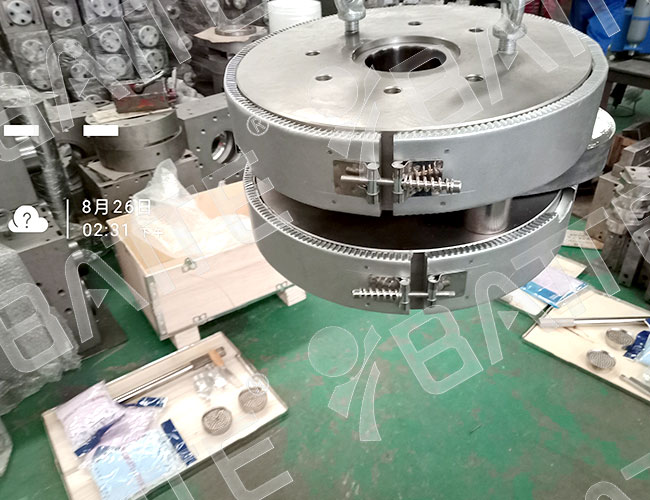
IV. Recommended Typical Configurations for Film Blowing Applications
Suitable Materials: Common film blowing materials such as PE, PP, HDPE, LDPE, EVA, etc.
Filter Area: We recommend selecting ¢60mm–¢100mm to balance flow rate and filtration efficiency
Mesh Size: Use 40–60 mesh for preliminary screening and 80–120 mesh for fine filtration; adjust based on raw material cleanliness
Heating Power: Configure 1.5–3 kW heating elements based on die head size to ensure temperature fluctuations ≤ ±5°C
Recommended Brand Configurations: Manufacturers such as Zhengzhou Bate offer compact manual screen changers specifically designed for film blowing lines, featuring an integrated streamlined flow channel design to reduce pressure loss
Email: sale@meltpump.com
WhatsApp: +86 158 3833 1071