What is a single-column screen changer?
A single-column screen changer is a highly efficient filtration device used in the continuous extrusion processes of polymer materials such as plastics, rubber, and synthetic fibers. Its key advantage lies in its ability to perform screen changes without stopping production, effectively ensuring production continuity while improving product quality and equipment utilization. It is suitable for a wide range of continuous extrusion applications.
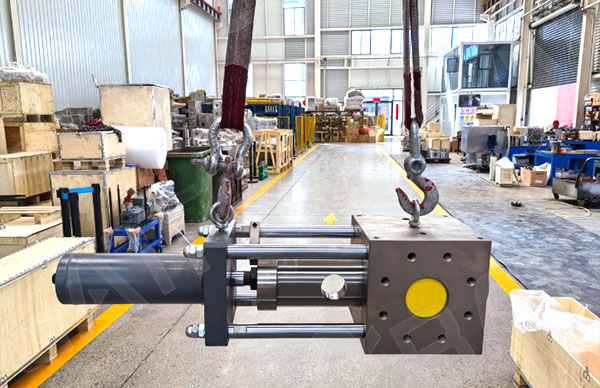
Working Principle of the Single-Column Screen Changer
The single-column screen changer features a “single-column, single-station/dual-station” structural design. Its core operating mechanism involves a hydraulic system driving the column to slide laterally, thereby enabling rapid screen switching. During normal production, one set of screens is positioned within the melt flow channel, responsible for intercepting impurities in the material; while another set remains outside the flow channel, in a standby, preheating, or cleaning state, ready for immediate use. When the pressure sensor detects that the pressure differential across the screen reaches a preset threshold, the hydraulic system activates instantly, driving the column to move precisely. This pushes the standby screen into the working area while simultaneously removing the clogged screen. The entire screen-changing process takes only a few seconds, with minimal fluctuations in material flow pressure.
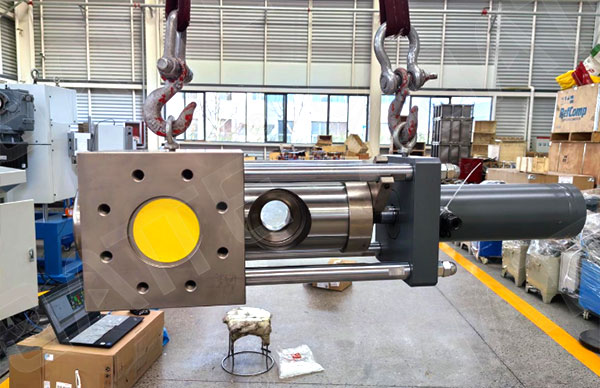
Structural Features of the Single-Column Screen Changer
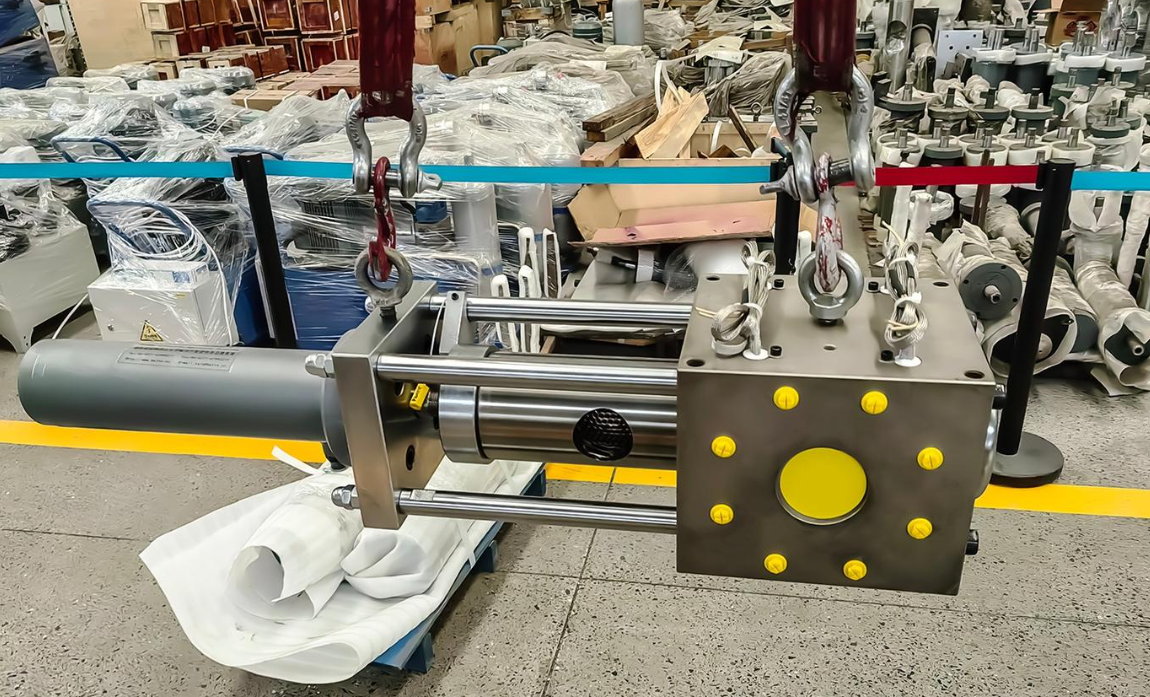
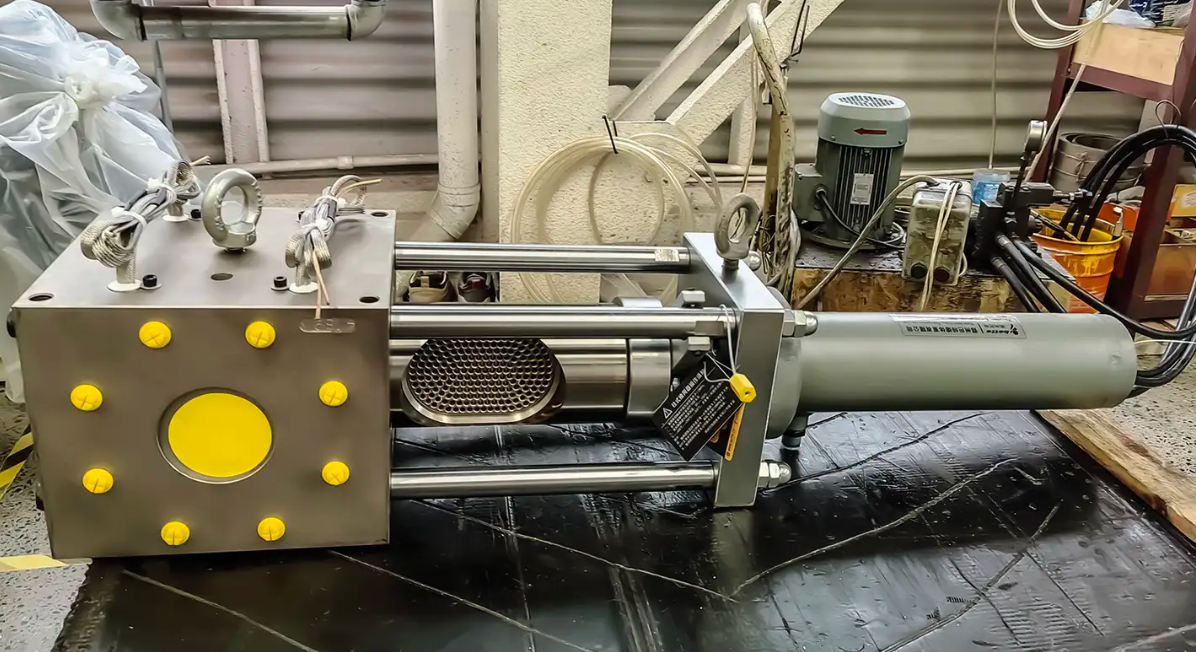
The core structure consists of the main body, column, hydraulic cylinder, screen blocks, and safety guard. The column features two independent filtration channels, each equipped with a screen block, enabling a “working-standby” dual-state switching mechanism to ensure continuous screen changing.
The rigid sealing structure ensures reliable sealing performance, effectively preventing melt leakage and safeguarding production safety while maintaining a clean on-site environment.
The flow channels are optimally designed to eliminate dead zones and material retention, preventing material degradation or contamination and further enhancing product molding quality.
The main body features an integral cylindrical structure crafted from high-temperature alloy steel, offering excellent resistance to high temperatures and pressures, making it suitable for the demanding conditions of polymer extrusion.
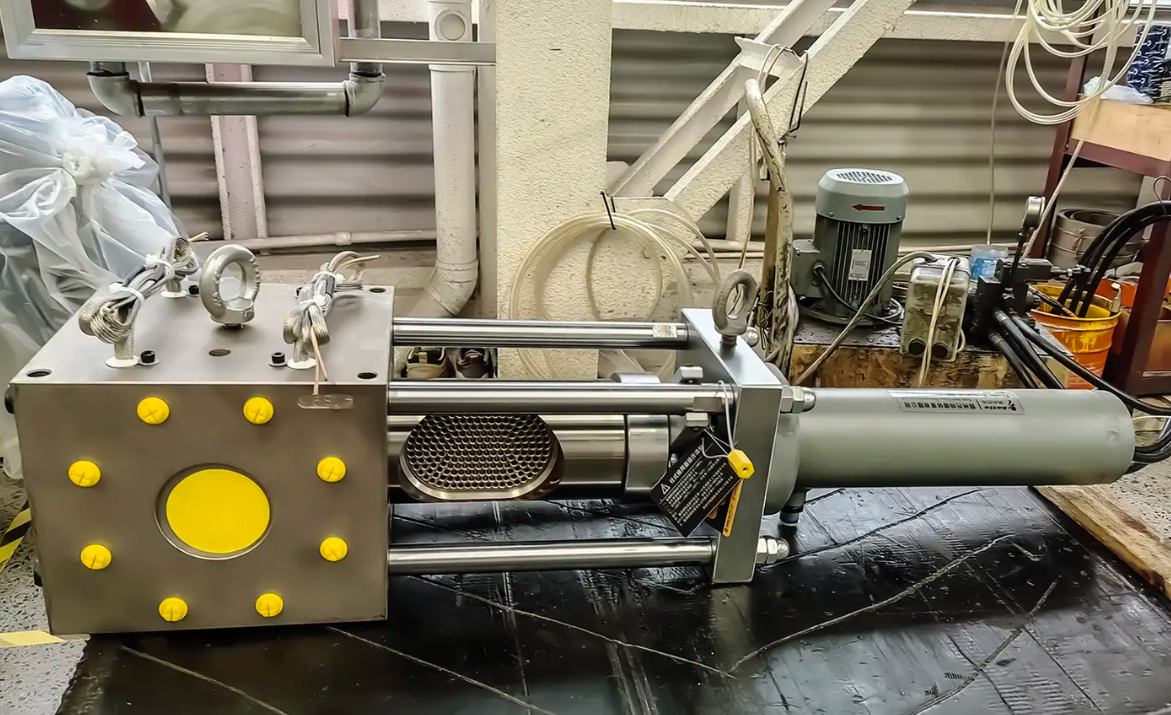
Types of Single-Column Screen Changers
Round Single-Column Screen Changer: The filter screen features a circular design, offering high structural versatility and compatibility with a wide range of standard filtration scenarios.
Rectangular Single-Column Screen Changer: The filter screen has a rectangular structure, designed to accommodate materials with specific shapes or fluid characteristics, meeting customized filtration requirements.
Curved Single-Column Screen Changer: The filter screen features a curved design, specifically engineered to fit specific extruder configurations or special extrusion processes, offering superior installation compatibility.
Cylindrical Single-Column Screen Changer: The filter screen features a cylindrical design, providing a larger filtration area and is suitable for production scenarios requiring high-flow filtration or specific fluid flow directions.
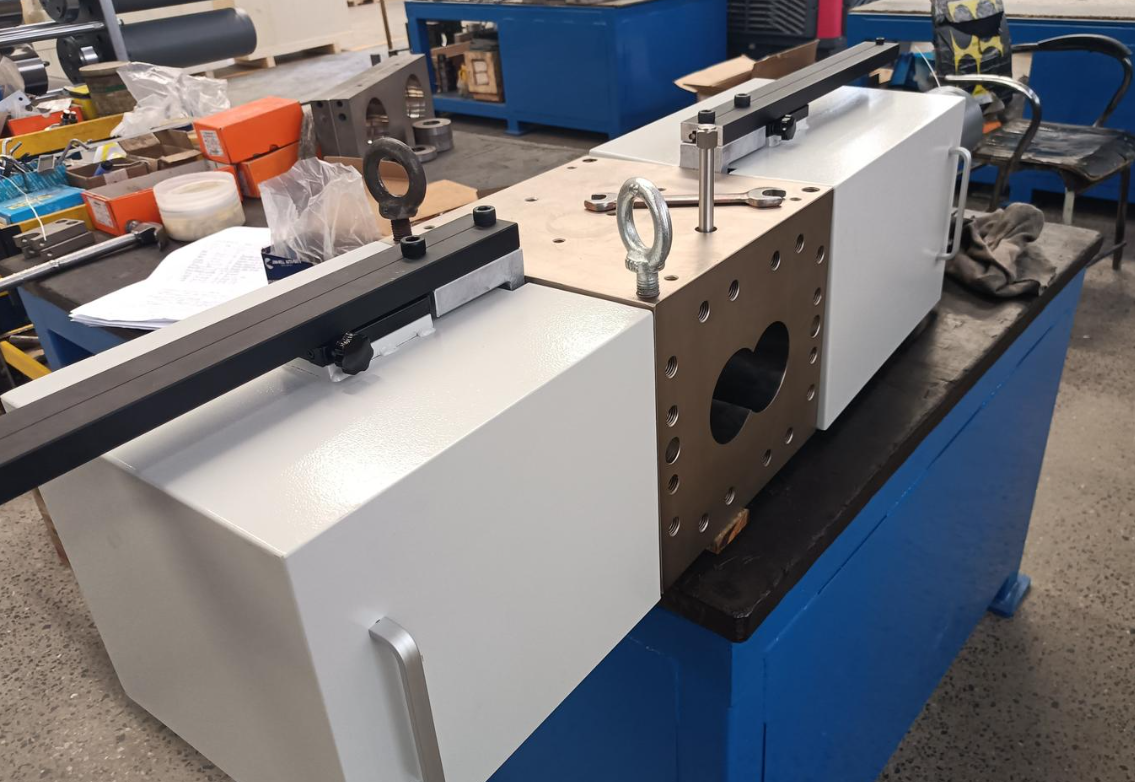
Applications of Single-Column Screen Changers
Suitable for continuous extrusion production of virtually all thermoplastic materials, including blown film, cast film, fiber drawing, and pelletizing.
Can be custom-designed for direct connection to single-screw extruders, twin-screw extruders, and reactors of various specifications, making it compatible with a wide range of production equipment.
Widely used in the filtration stages of production for products such as sheets, plates, pipes, profiles, hot melt adhesives (cleaning), and bonding agents.
Advantages and Disadvantages of Single-Column Screen Changers Advantages
Compact design with a small footprint; rapid screen-changing speed that significantly reduces downtime, making it particularly suitable for processes with high demands for continuous production; high filtration efficiency that effectively traps material impurities, improving product quality; simple operation requiring no specialized tools—ordinary workers can operate it proficiently after brief training; long-term use reduces downtime-related losses, increases effective production time, and significantly lowers the production cost per unit.
Disadvantages
Minor fluctuations in material pressure may occur during screen changes; therefore, this system is not suitable for applications requiring extremely stable material pressure.
Technical Specifications of Single-Column Screen Changer
Operating Temperature: ≤350°C
Operating Pressure: ≤50 MPa
Pressure Differential: 20 MPa
Suitable Melt Viscosity: 100–40,000 Pa·s
Heating Method: Electric heating / Heat transfer fluid heating (selectable as needed)
Optional Configurations
Adaptation for Highly Corrosive Environments: Custom solutions using highly corrosion-resistant materials are available to extend the equipment’s service life in environments with corrosive materials.
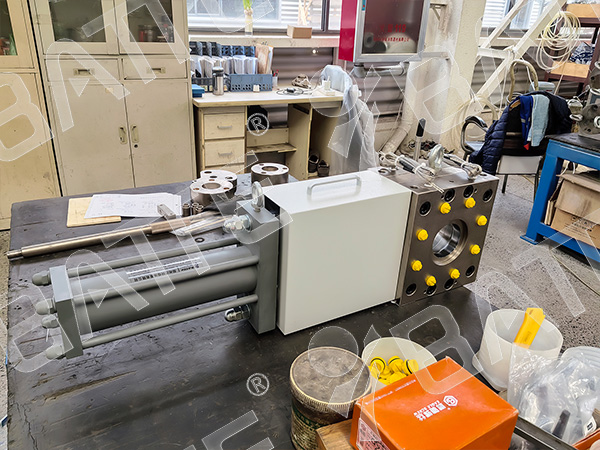
Mobile Installation Cart: Integrates a accumulator-type hydraulic power unit and electrical control system, facilitating on-site movement, installation, and maintenance operations.
Complete System Integration: Can integrate melt gear pumps, mixers, start-up valves, underwater pelletizing dies, and other related components to provide a unified connection and control solution that meets complete production requirements.
Email: sale@meltpump.com
WhatsApp: +86 158 3833 1071