Why Install a Screen Changer in an Extrusion System?
In the extrusion production of materials such as plastics, rubber, and synthetic fibers, the efficient and stable operation of the system directly impacts product quality and production efficiency. However, the following key issues often arise in actual production:
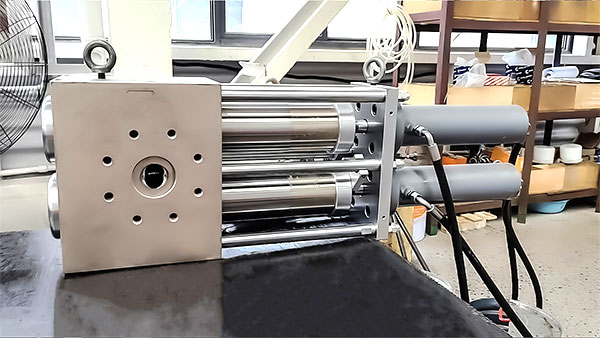
Risk of Contamination
Raw materials may contain impurities such as metal shavings (e.g., aluminum foil, copper wire), sand and gravel, wood chips, and degraded additives. The types of impurities are particularly complex in recycled plastic materials. If these impurities are not filtered out, they can cause defects in the product, such as pinholes, fractures, and rough surfaces. In severe cases, they can even clog the die, leading to equipment downtime or damage.
Threat of Production Interruptions
Traditional extrusion processes require continuous operation, but conventional screen-changing methods necessitate stopping the machine to disassemble and clean the screens. This leads to production interruptions, increased energy consumption (due to power loss from cooling and reheating), and the generation of waste material. For example, in the underwater strand cutting and pelletizing process, stopping the machine to change screens can cause the strand to break, requiring re-extrusion and reducing efficiency.
Raw Material Diversity and Process Complexity
Production often requires blending virgin material, recycled material, and various additives, and the melting characteristics of these materials vary significantly. For example, low-precision particles or unmelted crystalline matter in recycled material can disrupt melt homogeneity, leading to uneven product strength or the appearance of “wrap marks.” Additionally, impurities in high-temperature environments may accelerate die wear and shorten equipment lifespan.
Challenges in Melt Rheology Control
Unfiltered melt flows unevenly, making it prone to laminar flow or polymer orientation, which results in significant differences in the longitudinal and transverse strength of the finished product. For example, issues such as thinner centers and thicker edges in sheet materials frequently occur.
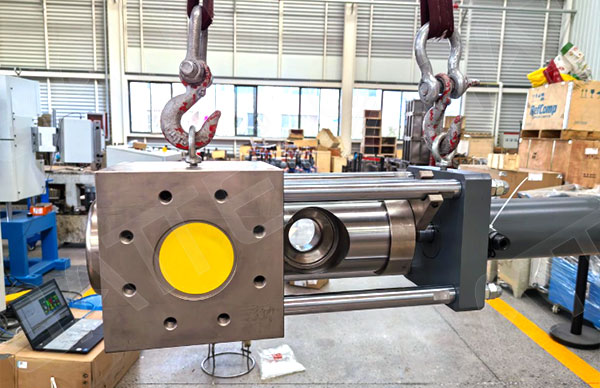
The Core Functions and Technical Advantages of Screen Changers
Serving as the “purification hub” of the extrusion system, the screen changer addresses the aforementioned challenges through innovative design. Its core value is reflected in the following aspects:
High-Efficiency Filtration and Contaminant Interception
Multi-stage filtration mechanism: The screen changer can be configured with filters of varying mesh sizes (e.g., 20–150 mesh) to trap impurities ranging from coarse particles (such as sand and gravel) to micron-level contaminants (such as metal shavings), ensuring melt purity.
Dynamic filtration capability: Belt-type screen changers use pressure to automatically advance the filter belt, requiring no manual intervention throughout the process, making them suitable for long-run production (e.g., film and optical fiber).
Ensuring Production Continuity
Non-stop screen change technology: Hydraulically driven or dual-station screen changers (such as the dual-column, four-channel type) can complete station switching within 1 second, preventing strand breakage or dimensional fluctuations caused by sudden pressure drops.
Pressure buffering function: As impurities accumulate on the screen, system pressure gradually increases, triggering a warning to change the screen and reducing the risk of sudden failures.
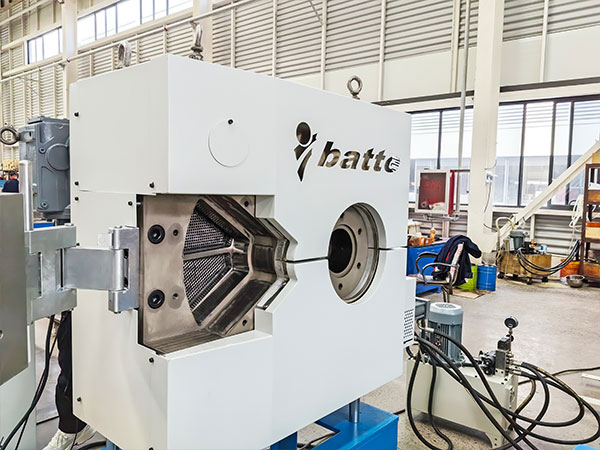
Quality Improvement and Process Optimization
Melt Homogenization: The combination of the filter screen and perforated plate creates a “damping effect,” extending melt residence time, improving plasticization, and enhancing product surface finish and pressure resistance.
Removal of Moisture and Volatiles: Increased backpressure accelerates the evaporation of moisture in the melt, reducing defect rates such as bubbles and sink marks.
Equipment Protection and Energy Savings
Extended Mold Life: Filtering out impurities reduces erosion and wear on mold runners, extending the mold replacement cycle.
Energy Conservation and Cost Reduction: Avoids energy waste caused by shutdowns and reheating; the single-plate quick-change screen changer can reduce energy consumption by more than 30%.
Email: sale@meltpump.com
WhatsApp: +86 158 3833 1071